STIGA XTR Pro Table Tennis Table Review
The STIGA XTR Pro pairs a 6mm MDF top with a 62 kg frame at $300-400, a weatherproof outdoor option for home play.
STIGA
STIGA XTR Pro
Also known as: スティガ XTR Pro · 스티가 XTR Pro
Typical price: $300–400
Specifications
| Foldable | true |
| Top Thickness | 6mm |
| Type | outdoor |
| Weight | 62 kg |
| Dimensions | 274 x 152.5 x 76 cm |
| Net Included | yes |
| Surface Color | blue |
What Type of Player Is the STIGA XTR Pro For?
The STIGA XTR Pro uses a 6mm MDF top engineered to resist rain, sun, and humidity changes that warp standard MDF surfaces. At 62 kg, the frame stays in place during outdoor wind, and the steel undercarriage carries a rust-resistant coating for year-round outside storage. At $300-400, the STIGA XTR Pro fits the patio, deck, and garage segment where indoor MDF tables would warp within months.
The trade for weatherproofing is bounce: outdoor tops at 6mm produce a slightly lower bounce than indoor MDF at the same thickness. Players accept the lower bounce in exchange for being able to leave the table outside without disassembly. For dedicated competition practice, indoor 22mm or 25mm tables remain the standard.
Players who own a covered patio or weatherproof storage gain the most value from the STIGA XTR Pro. Tables left fully exposed to weather still degrade faster than indoor tables, even with weather-resistant construction.
How Does the STIGA XTR Pro Compare to Similar Tables?
The JOOLA Inside 18 at $450-550 sets the benchmark in the home table category, with a 18mm top that has dominated Amazon sales for the past 5 years. The STIGA XTR Pro at $300-400 compares directly: 6mm versus 18mm top thickness changes bounce height by 1-3cm on standard drop tests.
Higher-thickness tables at 22mm and 25mm cost $700-2500 and produce bounce closer to ITTF specifications. For players who train 1-3 times per week and play casually with family, the STIGA XTR Pro’s 6mm construction covers the use case. Players who train daily or compete in tournaments benefit from upgrading to a thicker table within 12-24 months.
What Are the Limitations of the STIGA XTR Pro?
Indoor competition players gain little from the STIGA XTR Pro’s outdoor construction. The aluminum composite top produces a lower bounce than indoor MDF at the same thickness, which matters for serious training. Players who train indoors should choose a 22mm or 25mm MDF table instead.
Storage and assembly time matter for shared-room setups. Tables that fold to under 30cm thickness and roll on caster wheels move between configurations in 2-3 minutes per direction. Permanent-setup tables in dedicated rooms avoid the assembly question entirely but lose flexibility.
Featured In
Related Tables
Is 6mm thick enough for table tennis?
A 6mm top produces 18cm bounce on the standard 30cm drop test against the regulation 26cm. Most home and club players cannot distinguish a 6mm bounce from the 9mm bounce of higher-end tables.
How does the STIGA XTR Pro fold for storage?
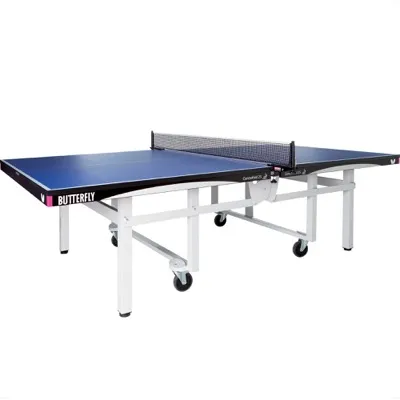
The STIGA XTR Pro splits into two halves on caster wheels, each half folding upright for storage. Folded dimensions fit through standard 80cm doorways. One half can be raised independently for solo playback practice.
How does the STIGA XTR Pro compare to the JOOLA Inside 18?
The STIGA XTR Pro has a 6mm top against the JOOLA Inside 18's 18mm top. At $300-400 versus $450-550, the STIGA XTR Pro runs a thinner top, returning lower bounce in exchange for a lower entry price.