Donic Defplay Senso Blade Review
The Donic Defplay Senso is a 5-ply DEF blade at 78g, hitting 5.5/10 speed and 9.5/10 control for $55-75.
Specifications
| Composition | 5W all-wood |
| Plies | 5 |
| Weight | 78g |
| Handle Type | FL |
| Blade Thickness | 5.8mm |
| Speed Class | DEF |
What Defines the Donic Defplay Senso’s Playing Characteristics?
The Donic Defplay Senso hits 5.5/10 speed against 9.5/10 control on a 5-ply 5W all-wood layup at 78g. The DEF classification reflects the blade’s intended use: controlled chopping and pushing from mid-distance. At $55-75, the Donic Defplay Senso sits in the mid-budget tier where DEF-class blades trade speed against control.
The all-wood construction flexes under contact, dwelling on the ball for 1-2 milliseconds longer than carbon-composite blades. That dwell time helps players add spin on brushing strokes and absorb pace on passive blocks. The 5.8mm total thickness places the Donic Defplay Senso in the standard all-wood thickness range used by allround and defensive blades.
Players developing technique find the all-wood feedback clearer than carbon blades: the woody pop on contact signals stroke quality directly. Mistimed contact produces a duller sound than clean contact, an audible cue that disappears with carbon stiffness.
How Does the Donic Defplay Senso Compare to Other DEF-Class Blades?
Among DEF-class blades, the Donic Defplay Senso competes with the Butterfly Andrzej Grubba on speed and weight. The Donic Defplay Senso weighs 78g versus the Butterfly Andrzej Grubba’s mass, a difference that changes how fast the racket head accelerates through contact.
Players choosing between the two get a different feel and trajectory shape. The Butterfly Andrzej Grubba offers proven tournament performance with broad rubber compatibility, while the Donic Defplay Senso fills a more specific role within the DEF category. At similar price tiers, the choice depends on rubber compatibility and handle preference rather than basic ratings.
Which Rubbers Pair Best with the Donic Defplay Senso?
The Donic Defplay Senso pairs with control-leaning rubbers that complement its softer feel. On the forehand, the Yasaka Mark V at $20-28 with its 8.5/10 control rating matches the blade’s allround character. For chopping setups, long pips on the backhand combined with inverted rubber on the forehand creates a defensive rotation.
Avoid pairing the Donic Defplay Senso with hard tensor rubbers like Tenergy 05: the blade’s 5.5/10 speed cannot fully load a 36-degree sponge, leaving the rubber’s catapult mechanism underused. The setup ends up slower and less spinny than rubber-blade combinations matched on hardness and energy transfer.
Featured In
Related Blades
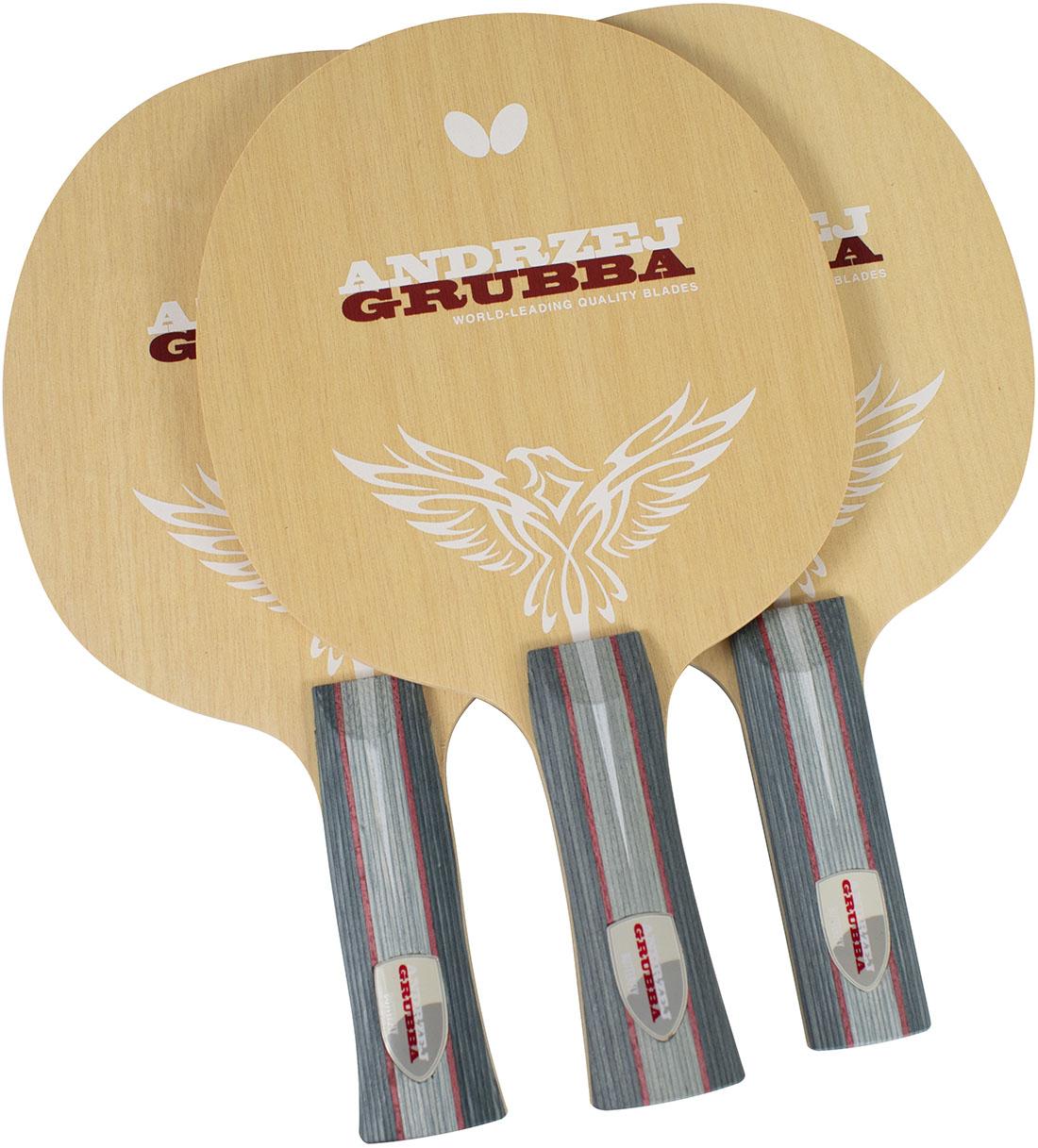 Butterfly Andrzej Grubba ~$40–55
  Butterfly Apolonia ZLC ~$270
  Butterfly BalsaCarbo X5 ~$90–120
  Butterfly BalsaCarbo X7 ~$90–120
 How heavy is the Donic Defplay Senso?
The Donic Defplay Senso weighs 78g, placing it in the light weight bracket. That weight enables fast racket head acceleration for serves and over-the-table flicks.
Is the Donic Defplay Senso a defensive blade?
The Donic Defplay Senso is classified DEF with 5.5/10 speed and 9.5/10 control. At $55-75, the blade pairs cleanly with chopping rubbers and long pips for players who win points through placement and spin variation.
What is the construction of the Donic Defplay Senso?
The Donic Defplay Senso stacks 5W all-wood in a 5-ply layup at 5.8mm total thickness. On contact, the layup produces a soft, woody response with longer dwell time than carbon-composite blades response with DEF-class energy transfer.