Butterfly Addoy Paddle Review
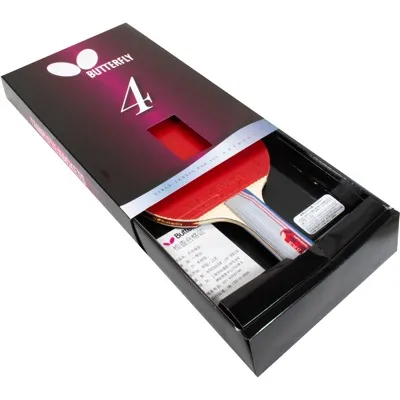
The Butterfly Addoy reads 5.5/10 speed and 8.5/10 control on a 5-ply blade at 168g for $20-30.
Butterfly
Butterfly Addoy
Also known as: バタフライ Addoy · 버터플라이 Addoy · 蝴蝶 Addoy
Typical price: $20–30
Specifications
| Plies | 5 |
| Sponge | 1.8mm |
| Type | premade |
| Weight | 168g |
| Handle Type | FL |
| Premade Vs Custom | premade |
| ITTF Approved | no |
What Playing Style Does the Butterfly Addoy Match?
The Butterfly Addoy reaches 5.5/10 speed and 5.5/10 spin against 8.5/10 control on a 5-ply blade with 1.8mm sponge, matching the 0-1200 USATT bracket where allround play with balanced topspin and blocking stays inside the table at $20-30.
At 168g, the Addoy sits in the medium weight bracket where most beginner players find the balance comfortable. The 1.8mm sponge handles topspin loops at moderate pace and cushions incoming drives without rebounding the ball wildly. On contact, the paddle produces a balanced response with neither the dead feel of thin sponges nor the spring of competition rubbers.
Players choosing between the Butterfly Addoy and the Killerspin JET200 at similar price points get a meaningful difference in playing characteristics. The Butterfly Addoy fits players who prioritize allround balance over specialist control orientation.
How Does the Butterfly Addoy Compare to Other Beginner Options?
The Butterfly Addoy occupies a position in the beginner segment defined by 5.5/10 speed and 8.5/10 control at $20-30. That combination places the paddle next to several established competitors with similar ratings.
The Killerspin JET200 anchors the same price tier with a different speed-to-control balance. Players who already own the Killerspin JET200 and want a shift toward control orientation step over to the Butterfly Addoy without leaving the premade segment.
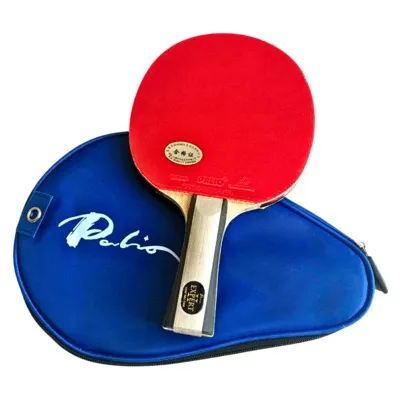
At a similar price point, the Palio Expert 2 reaches comparable basic ratings on a different blade construction. Choosing between the two comes down to handle preference and rubber feel rather than raw performance numbers.
Who Should Skip the Butterfly Addoy?
Players rated above 1400 USATT outgrow the Butterfly Addoy’s 5.5/10 speed within 6-12 months of regular practice. At that level, the rubber sponge cannot store enough energy for offensive looping at competition pace, and the blade lacks the stiffness to stabilize fast counter-drives. Upgrading to a custom setup with a STIGA Pro Carbon or a separate blade-and-rubber pairing returns a measurable performance jump.
Featured In
Related Paddles

Is the Butterfly Addoy good for beginner players?
The Butterfly Addoy hits 5.5/10 speed and 8.5/10 control at $20-30, matching beginner allround play. Players rated above 1500 USATT will find the 5.5/10 speed limiting on attacking strokes.
How does the Butterfly Addoy compare to the Killerspin JET200?
The Butterfly Addoy weighs 168g versus the Killerspin JET200. At $20-30, the Butterfly Addoy matches the Killerspin JET200 on basic ratings but differs in control orientation.