Butterfly Timo Boll TJ Blade Review
The Timo Boll TJ is Butterfly's junior carbon blade at 70g with T5000 fiber, a 154x146mm head, 8.0/10 speed, and 7.5/10 control at $105.
· Updated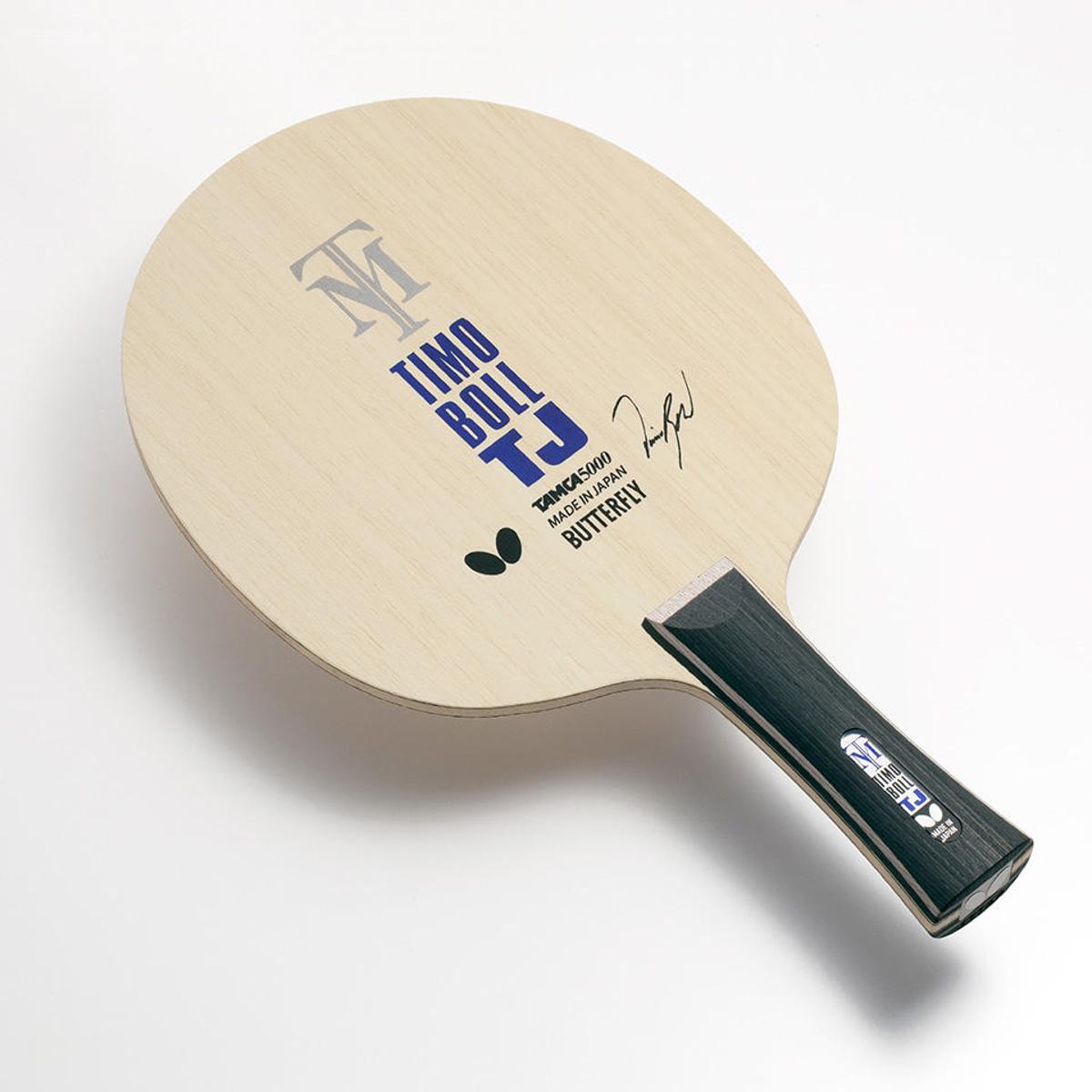
Specifications
| Composition | 3W + 2 T5000 Carbon |
| Plies | 5 |
| Weight | 70g |
| handleType | FL |
| bladeThickness | 5.7mm |
| speedClass | ALL+ |
| reaction | 10.5 |
| vibration | 11.4 |
| Top Thickness | 5.2mm |
| headSize | 154x146mm |
Carbon Speed in a Junior Frame
The Timo Boll TJ puts T5000 carbon fiber into a compact 154x146mm blade head weighing just 70g. Competitive juniors who have outgrown the all-wood Timo Boll J gain 8.0/10 speed without adding weight. The T5000 fiber, positioned between the wood layers, stiffens the blade enough to generate pace on loops and drives while keeping the overall mass low enough for young arms to swing repeatedly through long matches.
At 70g, the TJ is actually 2g lighter than the all-wood Timo Boll J despite the carbon layers. Butterfly achieves this by using thinner wood plies and relying on the carbon for structural rigidity. The result is a blade that accelerates faster through the stroke, compensating for the smaller muscles and shorter levers of players aged 10-14.
Control rates 7.5/10, half a point below the Timo Boll J’s 8.0/10. That tradeoff is expected with carbon construction. Young players need consistent stroke mechanics before the TJ’s speed becomes an advantage rather than a liability. Coaches typically recommend this blade for tournament-active juniors who already rally consistently with topspin.
Competitive Junior Setup and Alternatives
Pair the TJ with Butterfly Rozena for a balanced junior competition setup. Rozena’s moderate speed and spring sponge complement the blade’s carbon crispness without making the total setup uncontrollable. Total cost runs approximately $105 for the blade plus $45-50 per rubber sheet.
The STIGA Intensity NCT, a full-size carbon blade at 80g, costs $70-90 and attracts junior players looking for carbon on a budget. The TJ’s smaller head gives it a clear advantage for hands that cannot comfortably grip a standard blade. Once a junior’s hand grows large enough, the natural upgrade path leads to the Timo Boll CAF at 81g for a softer composite feel or directly to the Timo Boll ALC for full carbon offense at adult dimensions.
Related Blades
What is the difference between the Timo Boll J and TJ?
The J is all-wood at 72g with 7.5/10 speed and a 152x144mm head for $70. The TJ adds T5000 carbon at 70g with 8.0/10 speed and a slightly larger 154x146mm head for $105. The TJ suits competitive juniors.
At what level should a junior switch to the Timo Boll TJ?
Young players competing in tournaments and rated above 1000 USATT benefit from the TJ's 8.0/10 speed. Beginners still developing basic strokes should stay on the all-wood Timo Boll J until their technique is consistent.