Butterfly Timo Boll Spirit Blade Review
The Timo Boll Spirit is a 7-ply Arylate-Carbon blade at 87g with 9.0/10 speed and 7.5/10 control at $135, a budget alternative to the Boll ALC.
· Updated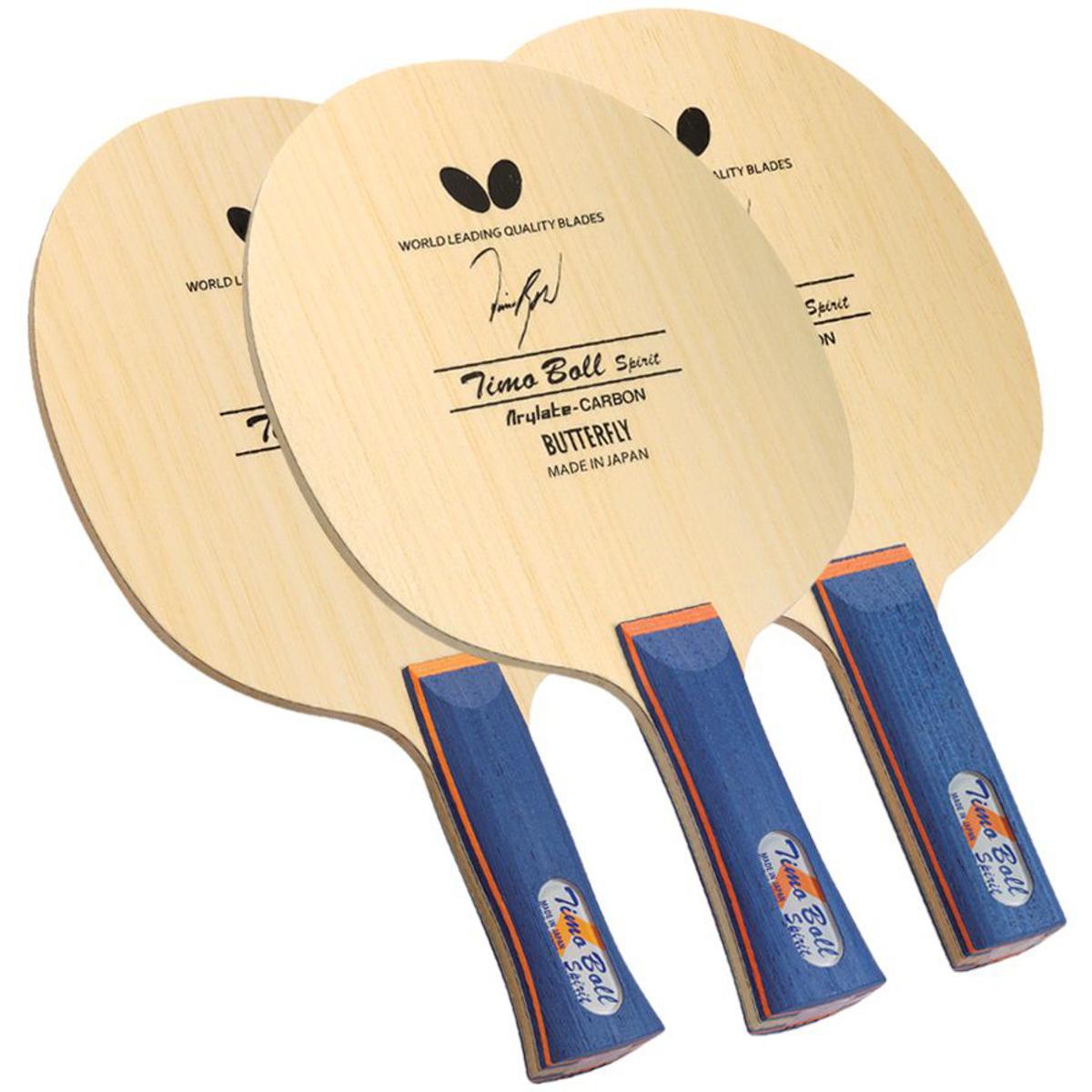
Specifications
| Composition | 5W + 2 Arylate-Carbon |
| Plies | 7 |
| Weight | 87g |
| handleType | FL |
| bladeThickness | 5.7mm |
| speedClass | OFF |
| reaction | 11.8 |
| vibration | 10.3 |
| Top Thickness | 5.8mm |
| headSize | 157x150mm |
Same ALC Construction, $50 Less
The Butterfly Timo Boll Spirit shares identical core specifications with the Timo Boll ALC: 7 plies, 5 wood layers plus 2 Arylate-Carbon layers, 9.0/10 speed, 7.5/10 control, and 87g weight. The playing characteristics overlap almost entirely. Both blades produce the same medium-hard feel on loops, the same direct ball trajectory on drives, and the same vibration dampening from the arylate fiber.
The $50 price gap ($135 versus $185) comes from handle shape variations and cosmetic differences rather than structural changes. Players who care about the Timo Boll ALC’s specific flared handle geometry or its logo design will pay the premium. Players who care only about on-table performance get functionally the same blade in the Spirit for 27% less.
Compared to the Viscaria ($185), the Spirit offers equivalent speed and control ratings at 87g versus 85g. The 2g difference is barely perceptible. Both are ALC blades with outer carbon placement, producing a direct, crisp ball response favored by aggressive loopers.
Practical Differences for Competitive Players
Handle feel is the one area where the Spirit and ALC diverge meaningfully. The Spirit’s handle has a slightly different taper and finish compared to the ALC, and grip comfort matters during 3-hour tournament sessions. Players with smaller hands often prefer the Spirit’s dimensions, while players accustomed to the ALC’s exact handle profile find the switch noticeable.
Rubber pairing follows the same principles as any ALC blade. Tenergy 05 or Dignics 05 on the forehand maximizes spin production, while softer options like Tenergy 80 or Rozena on the backhand add consistency on counter-loops. The blade’s 9.0/10 speed means rubber selection controls most of the overall setup speed. Pairing the Spirit with mid-tier rubbers ($30-40 per sheet) creates a complete setup under $200, well below the $300+ cost of a Zhang Jike ZLC blade alone.
Related Blades
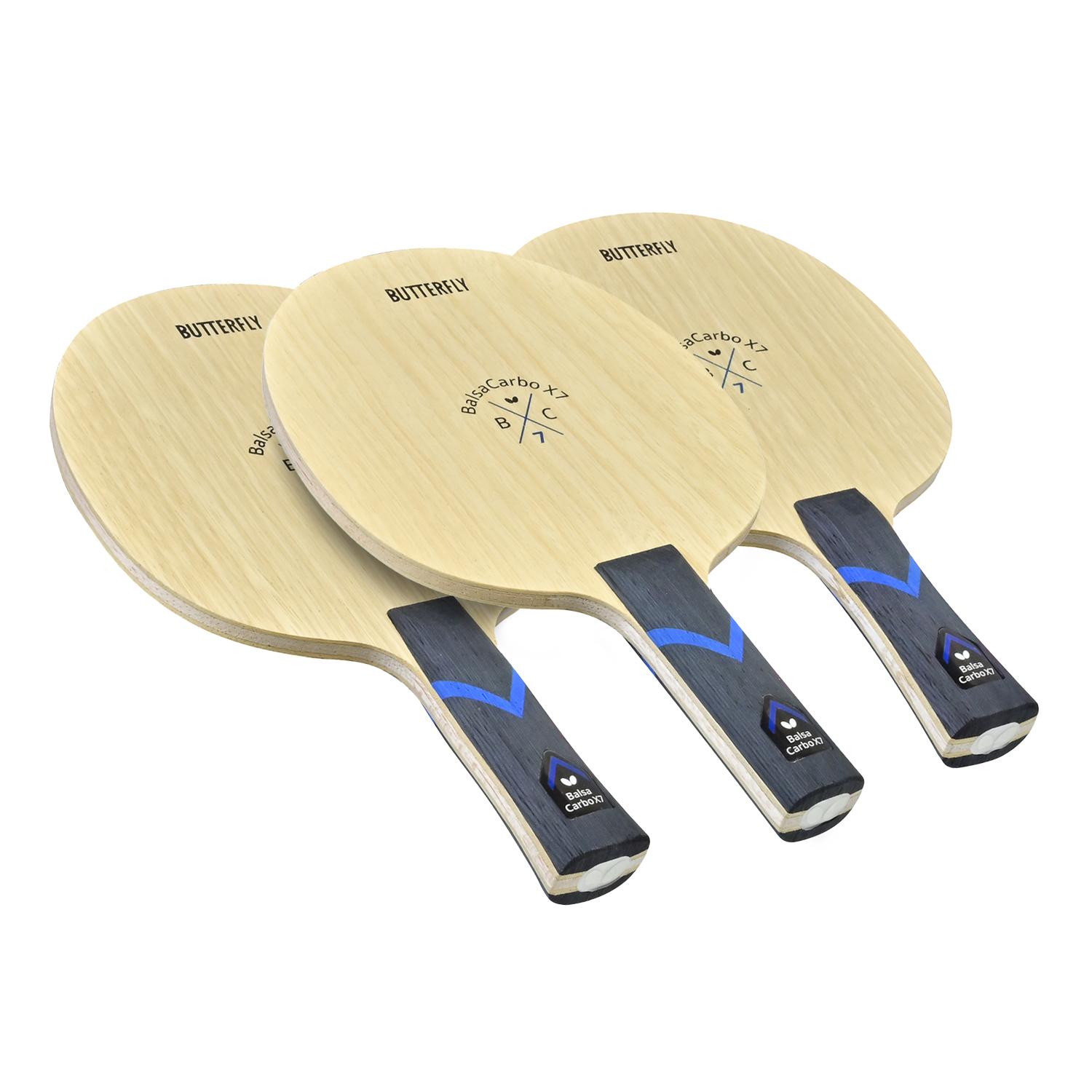
What is the difference between the Timo Boll Spirit and ALC?
Both use identical 5W + 2 Arylate-Carbon construction with 9.0/10 speed and 7.5/10 control. The Spirit costs $135 versus $185 for the ALC. Differences are limited to handle shape and cosmetic design.
Is the Timo Boll Spirit discontinued?
Butterfly still lists the Spirit as a current model, but availability varies by region. Online retailers carry it less frequently than the ALC, so checking multiple stores for stock is necessary.