Butterfly Revoldia CNF Blade Review
The Revoldia CNF uses plant-derived Cellulose Nanofiber in a 7-ply build at 86g, reaching 9.0/10 speed with 8.0/10 control at $370.
· Updated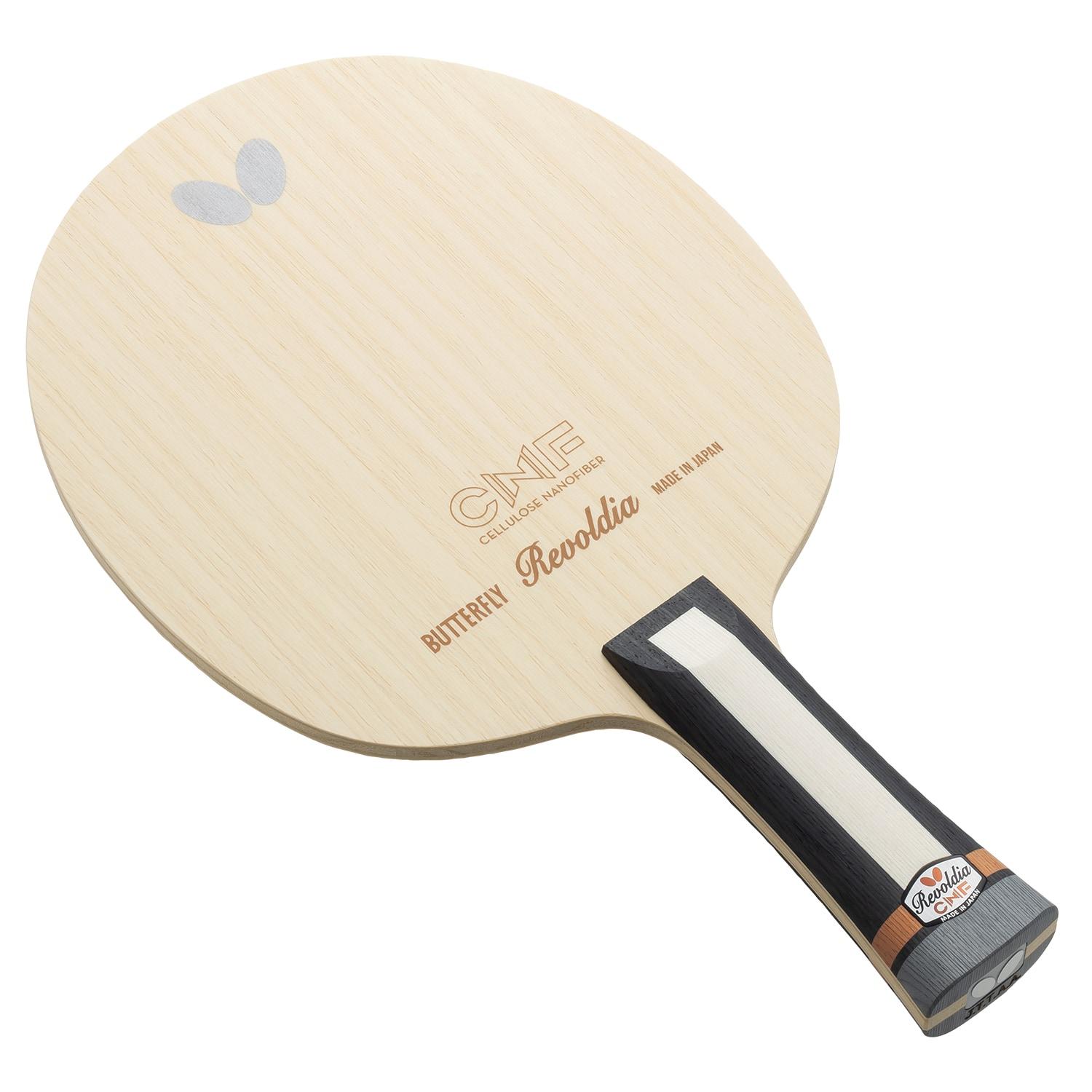
Specifications
| Composition | 5W + 2 Cellulose Nanofiber |
| Plies | 7 |
| Weight | 86g |
| handleType | FL |
| bladeThickness | 6.2mm |
| speedClass | OFF |
| reaction | 11.7 |
| vibration | 9.5 |
| Top Thickness | 5.7mm |
| headSize | 157x150mm |
How Does Cellulose Nanofiber Change the Playing Experience?
The Revoldia CNF produces the smoothest contact feel of any composite blade in Butterfly’s current range. Its 5-wood, 2-Cellulose-Nanofiber construction absorbs vibration on impact, creating a sensation closer to all-wood blades than to carbon or ZLC models. At 9.0/10 speed and 8.0/10 control, it occupies a rare middle ground: fast enough for aggressive loops, controlled enough for precise short game.
CNF is derived from plant cellulose processed into nanoscale fibers, giving it vibration-dampening properties that synthetic carbon fibers lack. On topspin loops, the ball dwells on the blade surface longer than on stiffer blades like the Amultart (6.5/10 control) or Viscaria (7.0/10 control). That extended dwell time allows the rubber to grip the ball and generate more spin per stroke. Players who brush the ball with a thin, fast contact will produce noticeably heavier spin on the Revoldia CNF than on ALC or ZLC alternatives.
At $370, the Revoldia CNF costs more than the Viscaria ($150-190) and the Timo Boll ALC ($100-130). The premium buys a fiber technology that no other manufacturer currently offers in production blades.
Which Playing Styles Gain the Most from 8.0/10 Control?
All-round attackers who mix heavy topspin with drop shots and chop blocks benefit most from the Revoldia CNF’s control rating. The 8.0/10 control means mis-hit balls still land on the table more often than on stiffer blades, reducing unforced errors during long rallies. At 86g, the blade weighs just 1g less than the Viscaria, so there is no adjustment period for players switching between them.
Defensive-minded players who occasionally attack will find the Revoldia CNF too fast compared to dedicated defensive blades rated 7.0/10 speed or below. Pure power players will find 9.0/10 speed insufficient compared to ZLC options at 9.5/10. The Revoldia CNF serves the player who values consistency across all stroke types over specialization in any single one.
Related Blades
What is Cellulose Nanofiber in table tennis blades?
Cellulose Nanofiber (CNF) is a plant-derived composite material that absorbs vibration more effectively than carbon or Arylate fiber. Butterfly uses it in the Revoldia to produce a smooth, wood-like feel at composite-blade speeds.
Is the Revoldia CNF better than the Viscaria?
The Revoldia CNF offers 8.0/10 control versus the Viscaria's 7.0/10, with 1 point less speed (9.0 vs 9.0). It costs $370 versus $150-190. Players who prioritize feel and spin over raw pace prefer the Revoldia.