Butterfly Outerforce ZLC Blade Review
The Outerforce ZLC combines outer-placed ZL-Carbon fiber in a 7-ply build at 87g, reaching 9.5/10 speed with 7.0/10 control at $245.
· Updated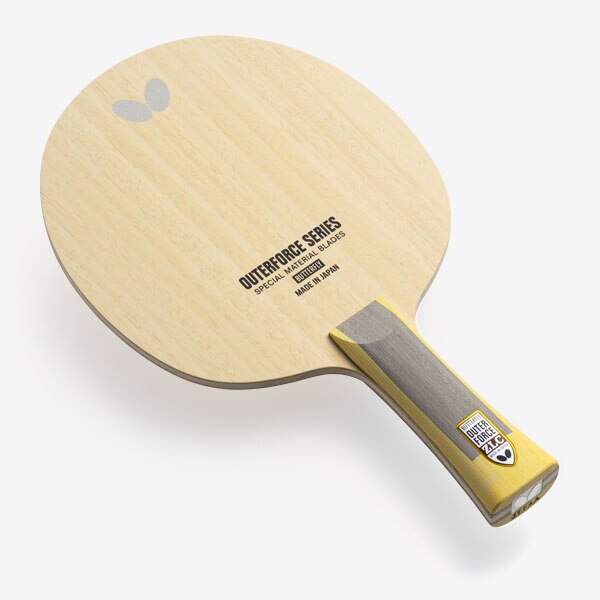
Specifications
| Composition | 5W + 2 outer ZL-Carbon |
| Plies | 7 |
| Weight | 87g |
| handleType | FL |
| bladeThickness | 5.7mm |
| speedClass | OFF+ |
| reaction | 11.3 |
| vibration | 11.1 |
| Top Thickness | 5.9mm |
| headSize | 157x150mm |
How Does Outer ZLC Placement Affect Ball Speed?
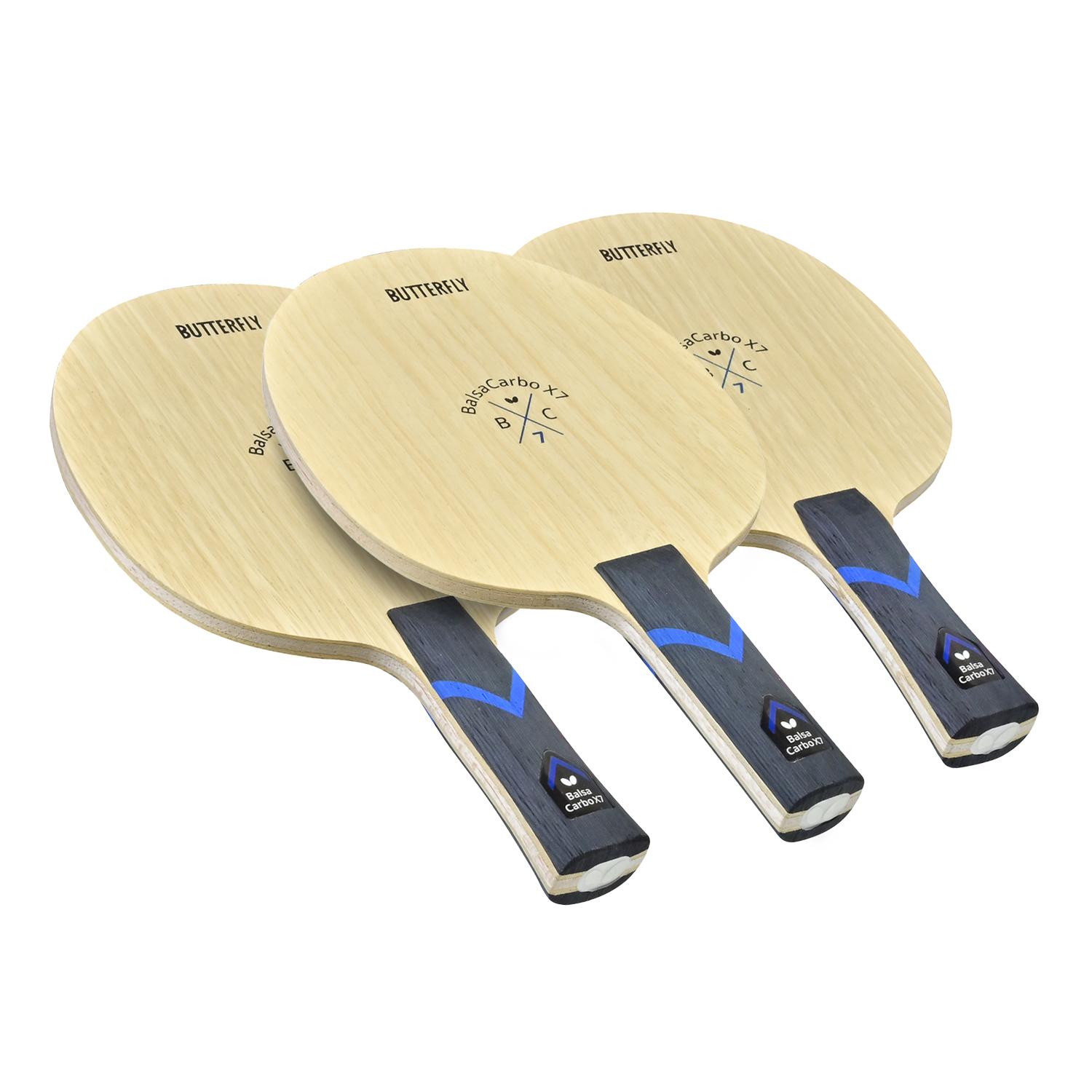
The Outerforce ZLC places ZL-Carbon fiber in the outer composite layer, closer to the blade surface than traditional ZLC constructions. This positioning produces 9.5/10 speed at 87g, matching the Mizutani Jun ZLC ($270) on speed while weighing 1g less. The outer placement creates a harder initial contact because the ball reaches the fiber layer sooner in its compression path through the blade.
ZL-Carbon fiber is lighter and more elastic than T5000 Carbon or standard carbon, giving the Outerforce ZLC a cleaner vibration profile than carbon blades at equivalent speeds. On topspin loops, the ball springs off the surface with a crisp, bright feedback that players describe as direct without being harsh. Control sits at 7.0/10, identical to the Viscaria but achieved through different fiber and placement.
At $245, the Outerforce ZLC undercuts the Mizutani Jun ZLC by $25 while delivering the same speed-control ratings. The price difference reflects the Mizutani blade’s signature-series premium rather than a material or performance gap. Players choosing between the two are selecting a feel preference, not a speed tier.
When Does Outer Placement Outperform Inner Placement?
Aggressive attackers who initiate rallies with fast opening loops benefit most from outer fiber placement. The Outerforce ALC ($165) demonstrated how outer placement adds pace versus inner equivalents, and the ZLC version extends that principle to a higher speed tier. First-attack balls reach the opponent 5-10% faster from the same stroke because the outer fiber engages earlier in the contact.
Counter-attackers who absorb pace from opponents and redirect it also gain from outer placement. The blade’s surface stiffness converts incoming ball energy into outgoing speed with less absorption. Players who block passively and wait for mistakes will find the Viscaria ($150-190) or Timo Boll ALC ($100-130) more forgiving, because inner-fiber blades cushion fast incoming balls rather than deflecting them at full speed.
Related Blades
How does the Outerforce ZLC compare to the Mizutani Jun ZLC?
Both reach 9.5/10 speed at 7.0/10 control. The Outerforce ZLC uses outer fiber placement for a harder surface feel at 87g and $245. The Mizutani Jun ZLC uses standard placement at 88g and $270, producing a slightly deeper ball contact.
Is the Outerforce ZLC good for backhand play?
At 87g with outer ZLC placement, backhand flicks and counter-drives feel fast and direct. The blade accelerates quickly through short backhand strokes. Players who favor a softer backhand feel prefer inner-fiber alternatives.