Butterfly Outerforce ALC Blade Review
The Outerforce ALC places Arylate-Carbon in the outer plies of a 7-ply blade at 87g, delivering 9.0/10 speed with 7.5/10 control at $165.
· Updated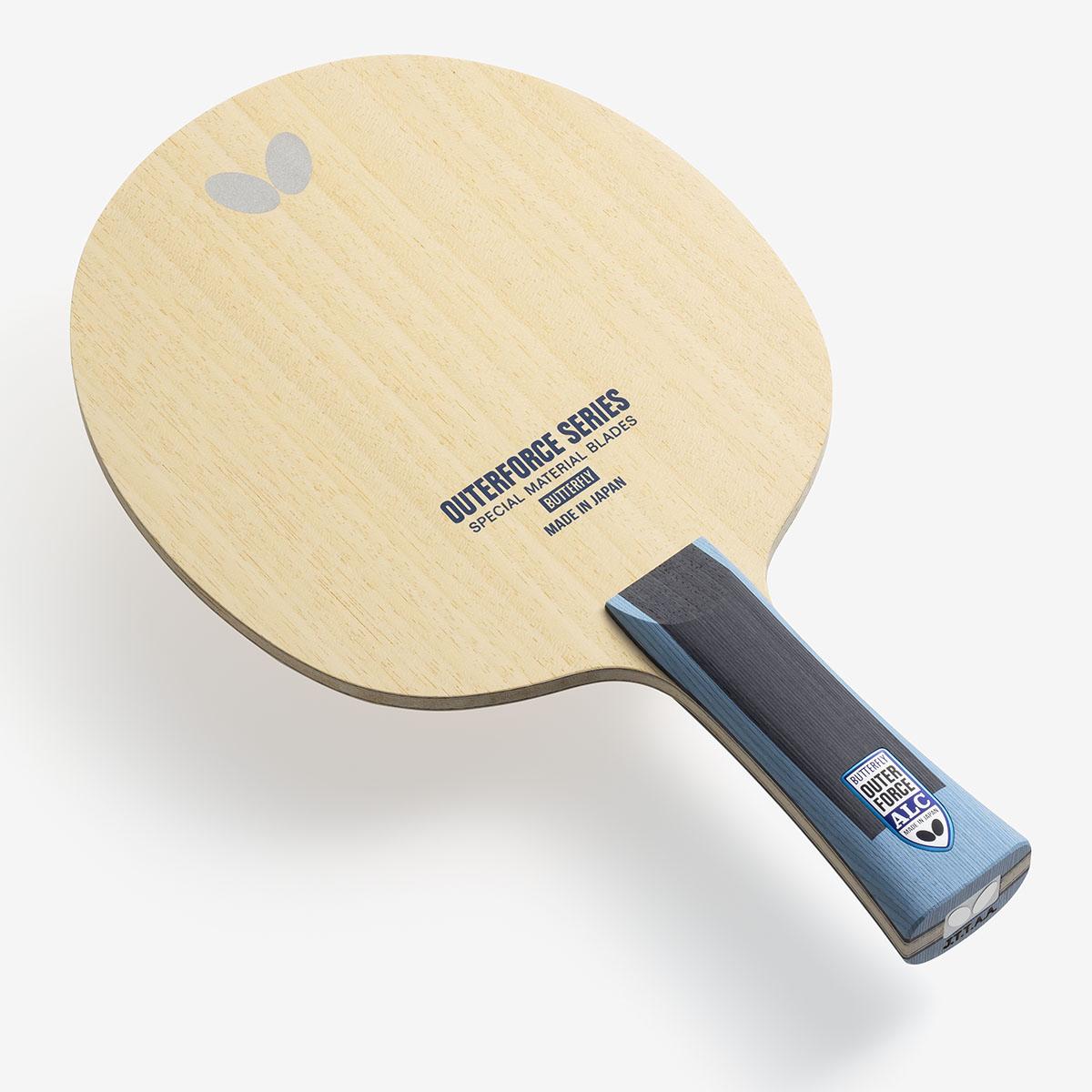
Specifications
| Composition | 5W + 2 outer Arylate-Carbon |
| Plies | 7 |
| Weight | 87g |
| handleType | FL |
| bladeThickness | 5.7mm |
| speedClass | OFF |
| reaction | 11.4 |
| vibration | 10.4 |
| Top Thickness | 6.2mm |
| headSize | 157x150mm |
What Does Outer Fiber Placement Change?
The Outerforce ALC positions its 2 Arylate-Carbon layers in the outermost composite positions, directly beneath the surface wood plies. This placement creates a harder, more direct contact feel compared to inner-fiber blades like the Timo Boll ALC ($100-130), where the same fiber sits closer to the handle. Ball departure is faster on the Outerforce ALC because the energy transfer path from rubber through wood to fiber is shorter.
At 9.0/10 speed and 7.5/10 control, the Outerforce ALC lands between the Timo Boll ALC (8.5/10 speed, 8.0/10 control) and the Viscaria (9.0/10 speed, 7.0/10 control). That half-point of extra control over the Viscaria comes from the Arylate fiber’s vibration-dampening properties, which are more perceptible in outer placement. The blade weighs 87g, identical to the Viscaria.
Butterfly released the Outerforce line in 2025 as a direct counterpart to their established Innerforce series. At $165, the Outerforce ALC costs slightly less than the Viscaria ($150-190 street price) while offering a different balance of speed and feel through fiber positioning rather than fiber composition.
Who Benefits from Switching to Outer Placement?
Players currently using inner-fiber ALC blades who want more speed without changing to a different fiber type gain the most from the Outerforce ALC. The transition preserves the familiar ALC vibration profile while adding pace. Forehand loops feel sharper and arrive at the opponent’s side faster. Backhand punches carry more weight through the ball.
The tradeoff is reduced dwell time on soft touches. Drop shots and short pushes require more wrist finesse on the Outerforce ALC than on inner-fiber models. Players who rely heavily on touch play near the net will prefer the Timo Boll ALC’s softer contact. The Outerforce ZLC ($245) takes the outer-placement concept further with ZL-Carbon fiber, pushing speed to 9.5/10 for players who want even more pace from the same construction philosophy.
Related Blades
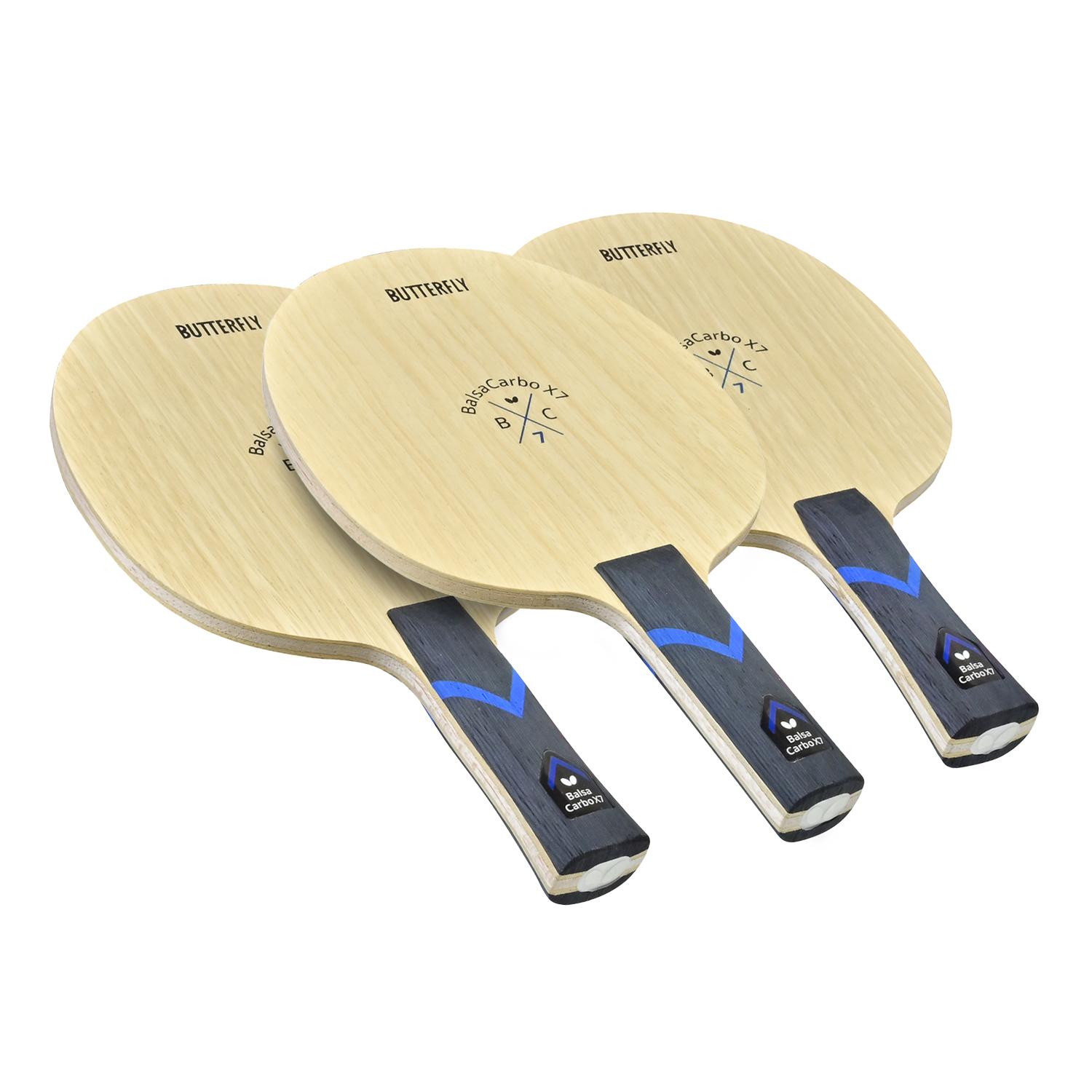
What is the difference between outer and inner fiber placement?
Outer-placed fibers sit closer to the blade surface, producing harder contact with faster ball departure. Inner-placed fibers sit closer to the handle, creating a softer feel with more dwell time. Both constructions use the same materials.
How does the Outerforce ALC compare to the Timo Boll ALC?
The Timo Boll ALC uses inner ALC placement with softer feel and 8.5/10 speed. The Outerforce ALC's outer placement pushes speed to 9.0/10 with 7.5/10 control while maintaining a similar weight at 87g versus 85g.