Butterfly Mizutani Jun Super ZLC Blade Review
The Mizutani Jun Super ZLC delivers 10/10 speed from 5-wood plus 2 Super ZL-Carbon layers at 91g, priced at $400 for professional-level attackers.
· Updated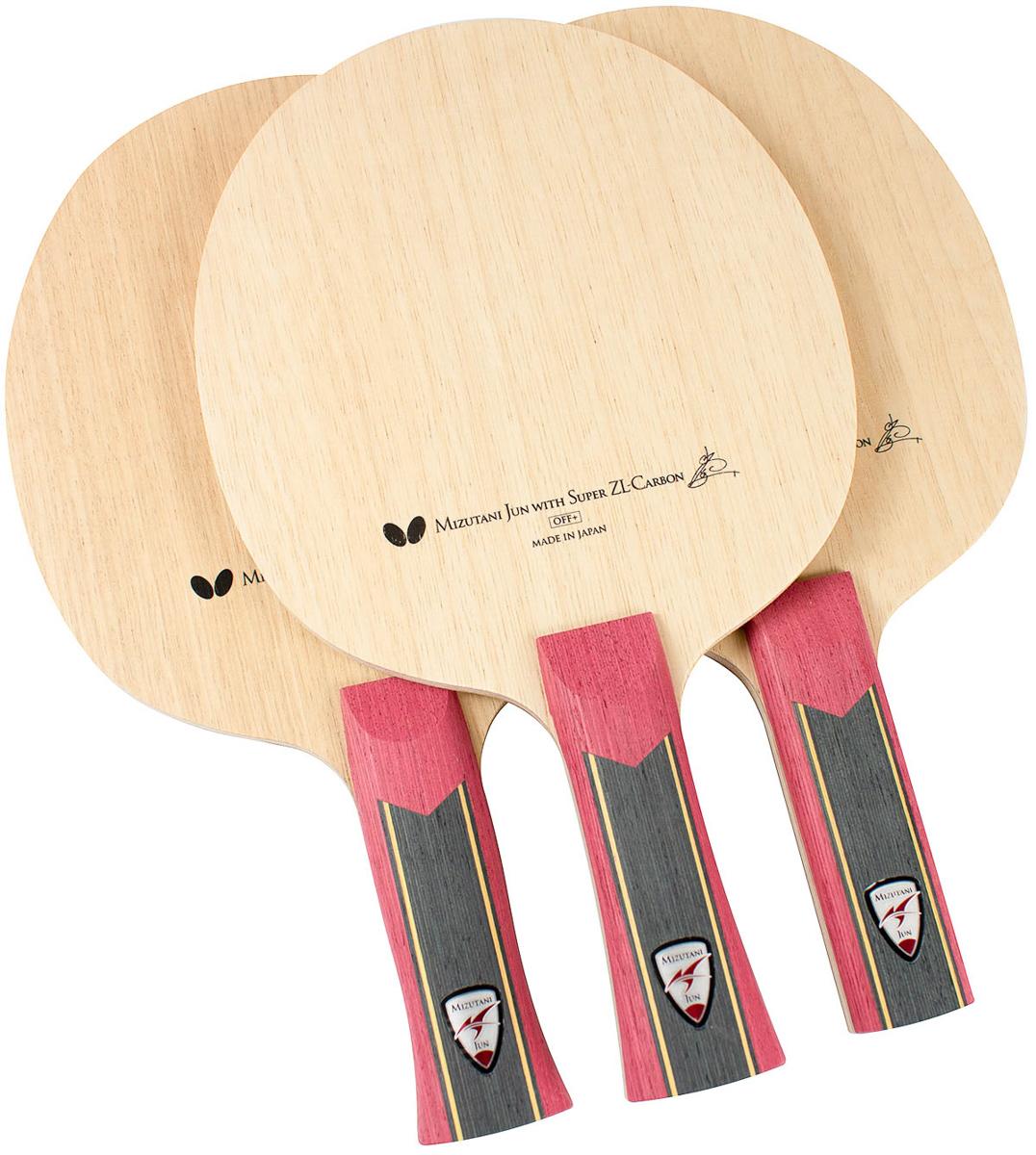
Butterfly
Butterfly Mizutani Jun Super ZLC
Typical price: $400
Specifications
| Composition | 5W + 2 Super ZL-Carbon |
| Plies | 7 |
| Weight | 91g |
| handleType | FL |
| bladeThickness | 5.7mm |
| speedClass | OFF+ |
| reaction | 12.5 |
| vibration | 11.6 |
| Top Thickness | 5.8mm |
| headSize | 157x150mm |
What Separates the Super ZLC from the Standard ZLC?
The Mizutani Jun Super ZLC hits 10/10 on Butterfly’s speed scale, maxing out the rating system. Its 5-wood, 2-Super-ZL-Carbon construction produces the hardest contact feel in the Butterfly blade catalog. At 91g, it outweighs the standard Mizutani Jun ZLC by 3g and the Viscaria by 4g. That mass difference is immediately noticeable when switching between blades during practice.
Super ZL-Carbon fiber bonds Zylon with carbon at higher density than standard ZLC, creating a stiffer composite layer that stores and releases energy faster. On forehand loops from mid-distance, the ball rockets off the surface with minimal dwell time. Control drops to 6.5/10, meaning off-center hits scatter unpredictably. Players who mis-time their strokes will spray balls wide or long with little margin for recovery.
The $400 price tag makes this the most expensive blade listed here alongside similar Super ZLC models. The Amultart ($300) delivers comparable 9.5/10 speed at 85g in a 5-ply ZLC construction that many players find easier to handle.
Who Needs This Level of Speed?
Tournament players competing at 2000+ USATT ratings who rely on third-ball attack sequences benefit from the Super ZLC’s instant acceleration. The blade eliminates the need for full backswings on counter-loops because the Super ZL-Carbon generates pace from compact strokes.
Recreational and intermediate players will struggle with 6.5/10 control. Every technical flaw gets amplified at this speed level. The standard Mizutani Jun ZLC at $270 provides 9.5/10 speed with 7.0/10 control, a far more forgiving combination that still delivers professional-grade power. The Sardius reaches 10/10 speed at $147 through T5000 carbon, offering a budget path to maximum speed for players willing to accept its 93g weight and 6.0/10 control.
Related Blades
Is the Mizutani Jun Super ZLC worth $400?
At $400, it costs $130 more than the standard ZLC version ($270) for an extra 0.5 speed and 3g of weight. Only players rated 2000+ USATT who need maximum power output will notice meaningful performance differences.
Why is the Mizutani Jun Super ZLC so heavy?
At 91g, it is the heaviest signature blade in Butterfly's lineup. The dense Super ZL-Carbon fibers and thick outer plies add mass that converts arm speed into ball velocity on full swings.