Butterfly Maze Advance Blade Review
The Maze Advance is a 5-ply all-wood blade at 80g, rated 8.0/10 speed and 7.5/10 control for $66, built for close-to-table offensive play.
· Updated
Specifications
| Composition | 5W all-wood |
| Plies | 5 |
| Weight | 80g |
| handleType | FL |
| bladeThickness | 5.8mm |
| speedClass | ALL+ |
| reaction | 10.6 |
| vibration | 10.2 |
| Top Thickness | 6.7mm |
| headSize | 157x150mm |
Offensive Speed from a Pure Wood Construction
The Maze Advance reaches 8.0/10 speed and 7.5/10 control from a stiff 5-ply all-wood frame at 80g. Unlike softer blades in Butterfly’s beginner range, the Maze Advance transmits energy directly into the ball on hard contact. Intermediate players who have developed consistent loop technique feel the difference immediately: loops travel faster and flatter compared to the Maze Magic ($50), which absorbs energy through flex.
At $66, the Maze Advance occupies a competitive price bracket. The Petr Korbel costs $3 more at $69 and matches the Maze Advance’s 8.0/10 speed rating, but the Korbel weighs 93g versus the Maze Advance’s 80g. That 13g difference matters during long rallies and fast exchanges at the table’s edge. Players who prefer a lighter racket will favor the Maze Advance. Players who want mass-generated power lean toward the Korbel.
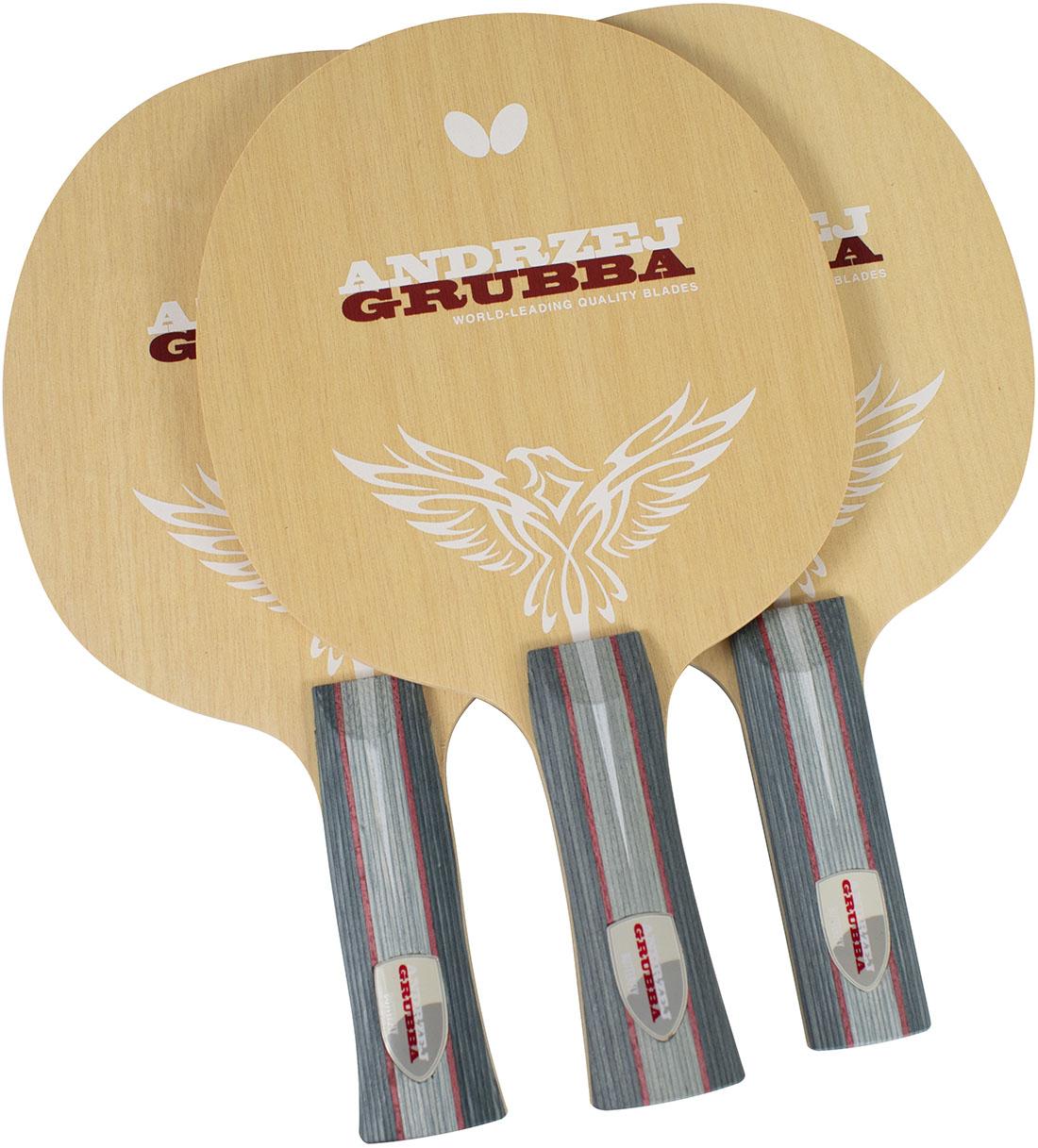
Stiffness defines the Maze Advance’s character. The blade resists bending on impact, creating a firm, responsive feel that rewards clean contact and punishes mishits. Off-center strokes produce more vibration on the Maze Advance than on flexible blades like the Andrzej Grubba ($55). This immediate feedback accelerates stroke correction during practice.
Rubber Pairing and Competitive Use
Butterfly Rozena on both sides creates a balanced offensive setup under $130 total. This pairing produces enough spin for opening loops while keeping the setup controllable for blocking and counter-driving. Upgrading the forehand rubber to Tenergy 05 increases spin production on the attacking side, though the backhand Rozena keeps the overall setup manageable.
For players competing between 1200 and 1600 USATT, the Maze Advance handles the demands of club-level tournaments. Third-ball attacks carry enough speed to win points against similarly rated opponents. Above 1600, players generally need more blade speed and transition to 7-ply constructions like the Korbel SK7 ($99) or composite blades like the Timo Boll ALC.
Compared to Non-Butterfly Alternatives
The Yasaka Sweden Extra ($60) competes directly with the Maze Advance. Both are 5-ply all-wood offensive blades in similar price ranges. The Sweden Extra tends to feel slightly softer with more dwell time, while the Maze Advance plays stiffer and more direct. The STIGA Offensive Classic ($50) offers a budget alternative with slightly less speed. Among Butterfly’s own lineup, the Primorac at $77 provides a half-step down in speed (7.5/10) with a half-step up in control (8.0/10), suiting players who prioritize consistency over pace.
Related Blades
How does the Maze Advance differ from the Maze Magic?
The Maze Advance adds a full point of speed (8.0 versus 7.0) and loses a point of control (7.5 versus 8.5) compared to the Maze Magic. It costs $16 more at $66 and targets intermediate rather than beginner players.
Is the Maze Advance good for looping?
Yes, for close-to-table loops. The stiff 5-ply construction and 80g weight produce direct feedback on topspin strokes. Mid-distance loopers who need more pace should consider the Korbel SK7 at $99 with its 8.5/10 speed.