Butterfly Innerforce Layer ALC.S Blade Review
The Innerforce Layer ALC.S is a softer 7-ply inner Arylate-Carbon blade at 88g with 8.0/10 speed and 8.5/10 control at $165 for spin-focused play.
· Updated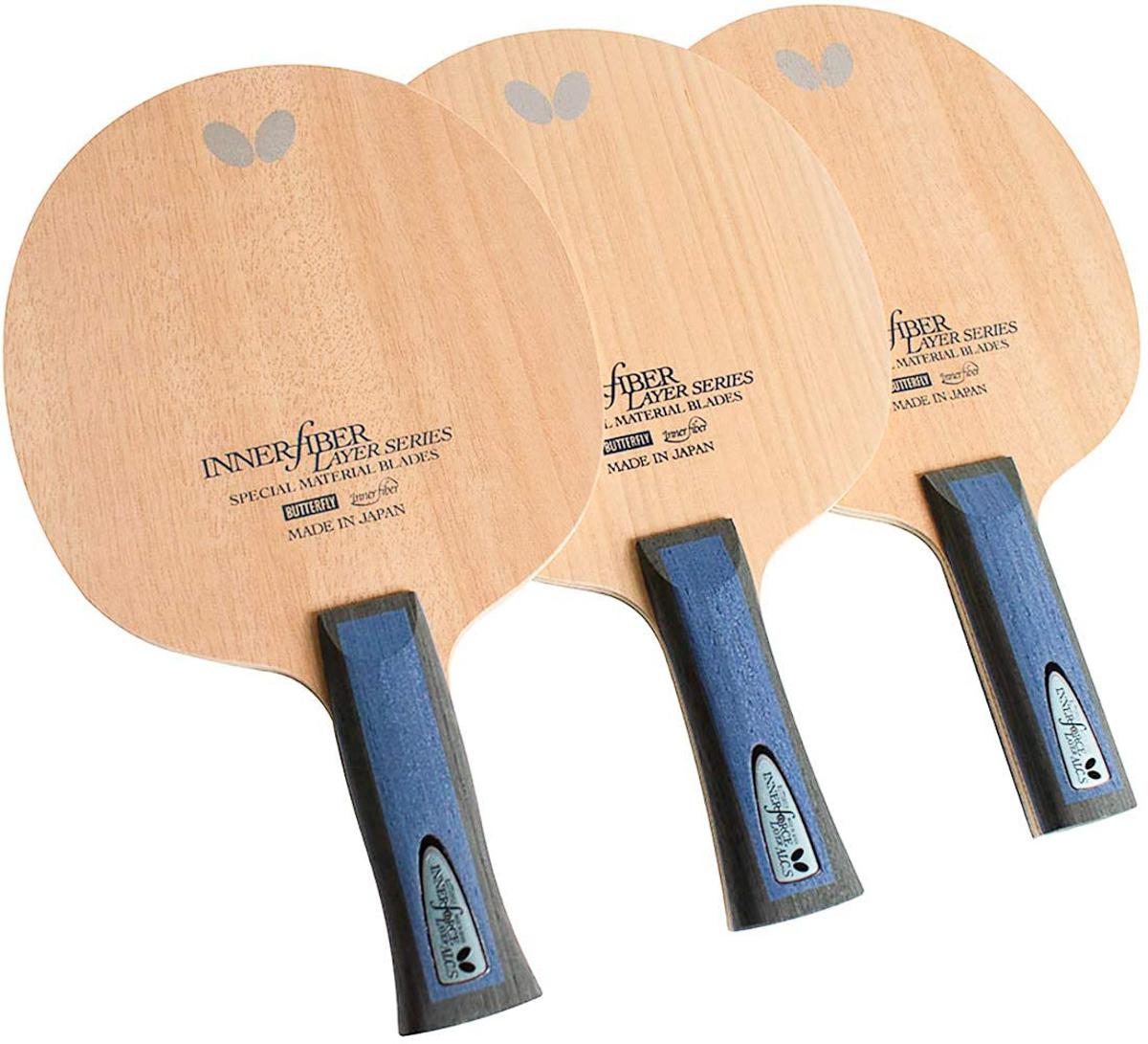
Specifications
| Composition | 5W + 2 inner Arylate-Carbon |
| Plies | 7 |
| Weight | 88g |
| handleType | FL |
| bladeThickness | 5.7mm |
| speedClass | ALL+ |
| reaction | 10.1 |
| vibration | 8.4 |
| Top Thickness | 5.5mm |
| headSize | 157x150mm |
How Does the Thinner Profile Change Ball Contact?
The Innerforce Layer ALC.S uses a thinner blade profile than the standard Innerforce Layer ALC, approximately 5.5mm versus 6.0mm. That half-millimeter reduction softens the hitting surface, extending dwell time and increasing the player’s ability to apply spin through brushing contact. At 8.0/10 speed and 8.5/10 control, the ALC.S is the most controlled composite blade Butterfly produces without moving to all-wood construction.
The 88g weight keeps the blade substantial in hand despite its thinner profile. On topspin loops, the ball wraps into the rubber noticeably longer than on the standard ALC version, and that extended contact lets players with developing technique generate spin they cannot produce on stiffer blades. Short pushes stay low over the net with minimal effort because the softer surface absorbs rather than rebounds incoming backspin.
Compared to the Timo Boll ALC ($150, 8.5/10 speed, 7.5/10 control), the ALC.S trades speed for control by combining inner fiber placement with the thinner profile. Players who find the Timo Boll ALC’s outer-fiber directness difficult to control gain a full point of control with the ALC.S while giving up only half a point of speed.
Ideal Player Profile and Upgrade Path
Intermediate players rated 1000-1600 USATT who want composite blade benefits without the steep learning curve of faster models find the ALC.S well suited. The 8.5/10 control lets players focus on developing stroke technique rather than managing blade speed. Allround players who mix topspin with blocking and pushing benefit from the blade’s versatility across playing distances.
As skill improves, the natural upgrade path leads to the standard Innerforce Layer ALC at the same $165 price for an additional half-point of speed while staying within the inner-fiber Innerforce platform. Players who want more power without leaving the inner-fiber design jump further to the Harimoto Innerforce ALC at $185.
Related Blades
What does the .S mean in the Innerforce Layer ALC.S?
The .S denotes a softer, thinner blade profile (approximately 5.5mm vs 6.0mm). This reduces speed from 8.5/10 to 8.0/10 while increasing control from 8.0/10 to 8.5/10 compared to the standard ALC version.
Can the ALC.S generate enough speed for offensive play?
At 8.0/10 speed, the ALC.S handles topspin attacks effectively at close-to-mid distance. Players who loop from beyond 2 meters need a faster blade. For close-table all-round play, 8.0/10 is sufficient.