Butterfly Balsa Carbo X7 Blade Review
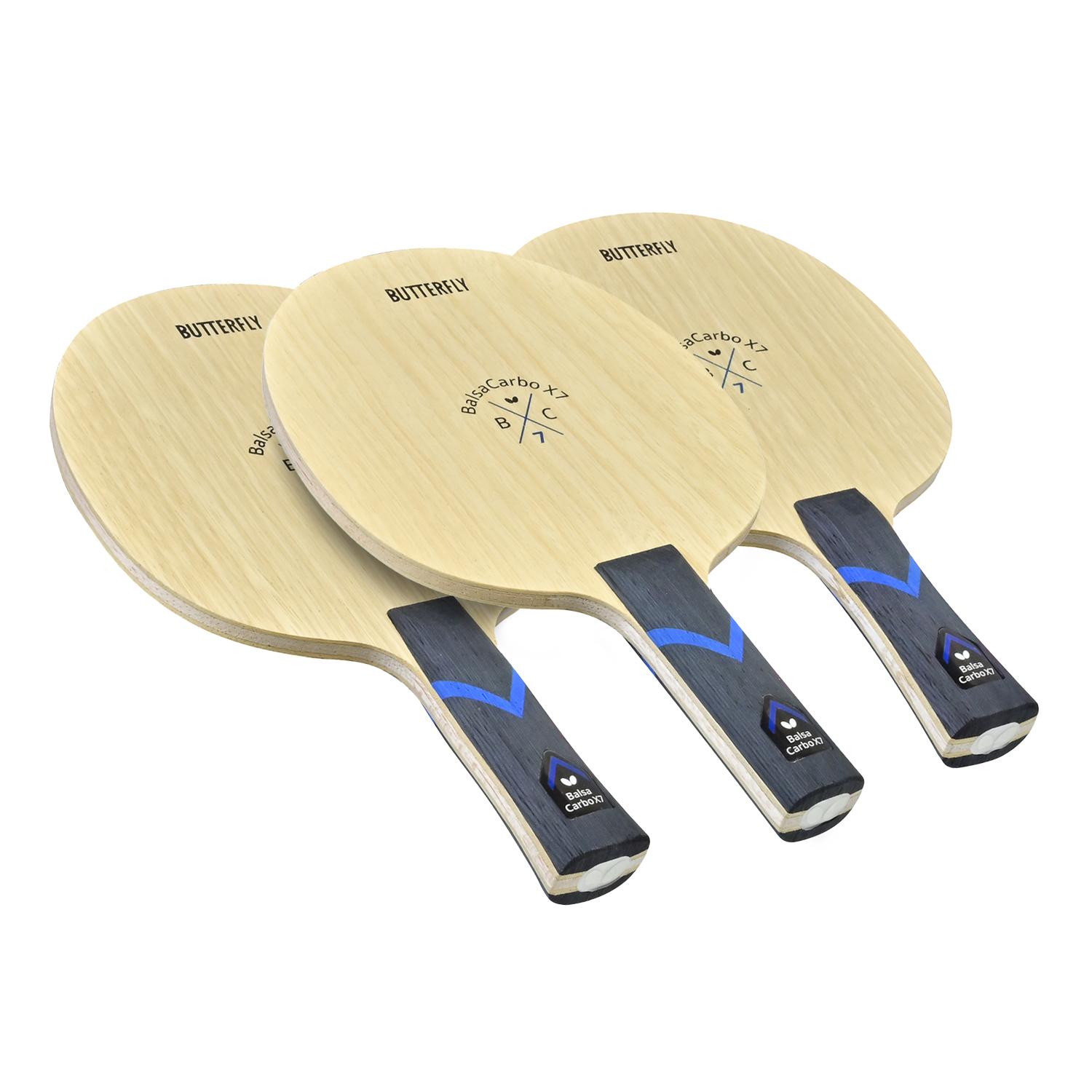
The Balsa Carbo X7 is Butterfly's ultralight 7-ply carbon blade at 75g with 8.5/10 speed and 7.5/10 control at $83 for intermediate offense.
· UpdatedSpecifications
| Composition | 5W + 2 Carbon (balsa core) |
| Plies | 7 |
| Weight | 75g |
| handleType | FL |
| bladeThickness | 5.7mm |
| speedClass | OFF |
Why Choose an Ultralight Carbon Blade at $83?
The Butterfly Balsa Carbo X7 weighs 75g, making it one of the lightest carbon blades on the market. Its 7-ply construction pairs a balsa wood core with 2 carbon layers, reaching 8.5/10 speed while keeping control at 7.5/10. For intermediate players transitioning from all-wood blades, this combination delivers noticeable power gains without the arm fatigue that heavier 87-90g blades cause over long training sessions.
Balsa’s natural softness absorbs vibration on off-center hits. The carbon layers add stiffness to the outer plies, so drives and smashes carry pace that pure balsa cannot produce. At $83, the Balsa Carbo X7 costs less than half the price of Butterfly’s Viscaria ($185), giving budget-conscious players a carbon blade option that punches above its price point.
The SK Carbon ($100) offers a similar entry-level carbon experience but uses T5000 carbon in a 5-ply build at 78g. Players who prefer a stiffer, thinner blade profile will favor the SK Carbon. Players who want maximum swing speed and a softer feel will prefer the Balsa Carbo X7.
Rubber Pairing and Playing Characteristics
The Balsa Carbo X7’s soft core changes how rubbers behave compared to harder blades. Tensor rubbers like Tenergy 05 feel noticeably bouncier because the balsa flexes and springs back, adding a catapult effect. Chinese-style tacky rubbers like DHS Hurricane 3 lose some of their low-throw character on this blade, producing a higher arc than expected.
For intermediate offensive players, pairing the Balsa Carbo X7 with a medium-hardness rubber (45-47 degrees) on both sides balances speed and control. The blade’s light weight lets players generate fast racket speed on loops, compensating for any power gap versus heavier carbon blades. Close-to-table blocking feels stable because the balsa absorbs incoming pace rather than reflecting it, a characteristic that harder carbon blades like the Zhang Jike T5000 do not share.
Related Blades
How does the Balsa Carbo X7 compare to the X5 version?
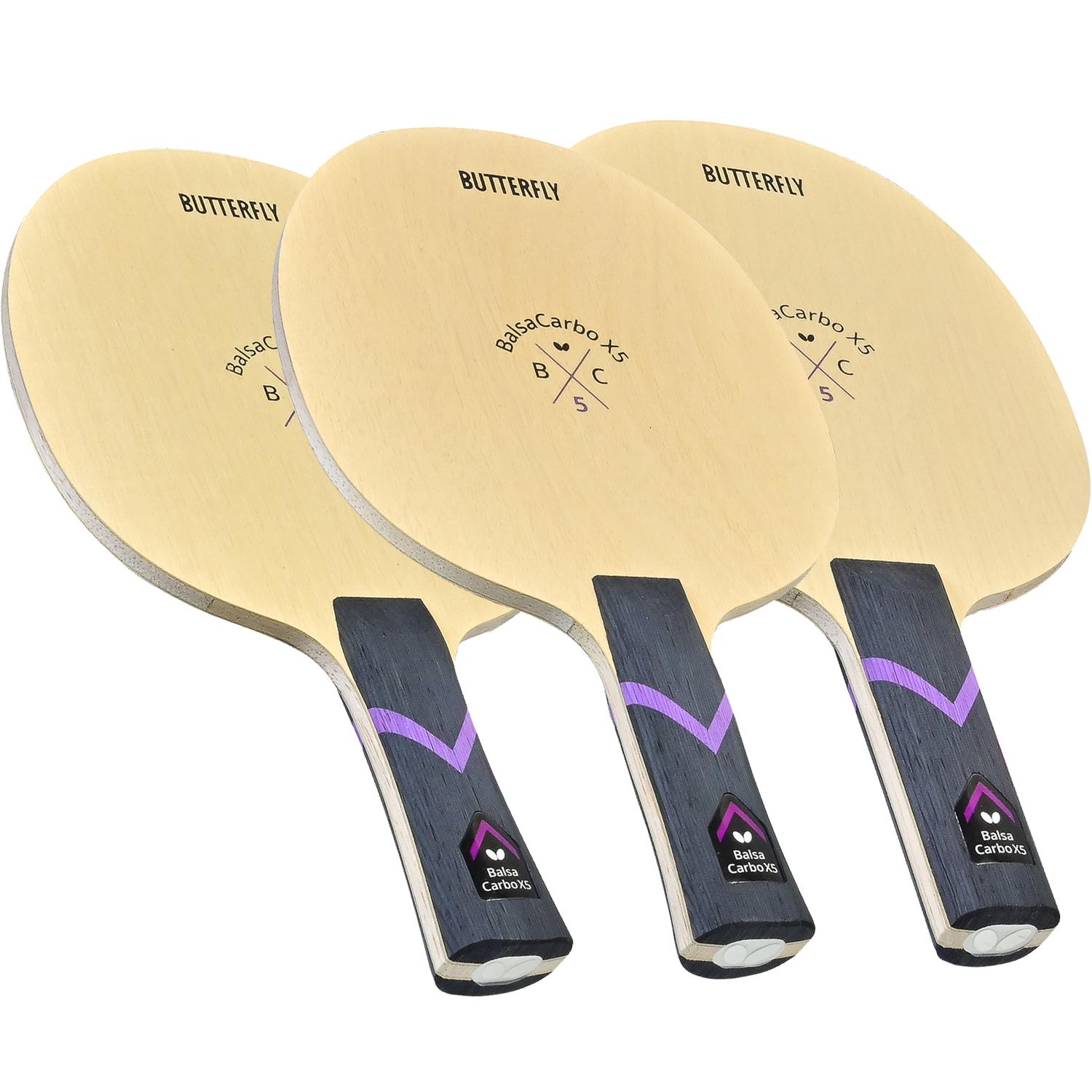
The X7 adds two outer wood plies for a stiffer feel and 8.5/10 speed versus the X5's 8.0/10. Both weigh under 80g, but the X7 generates more power on drives without increasing arm fatigue.
Can you loop with a balsa core blade?
Yes. The balsa core flexes on contact, creating a natural catapult effect that produces spin. The 75g weight allows faster swing speed, which compensates for the softer core on topspin strokes.